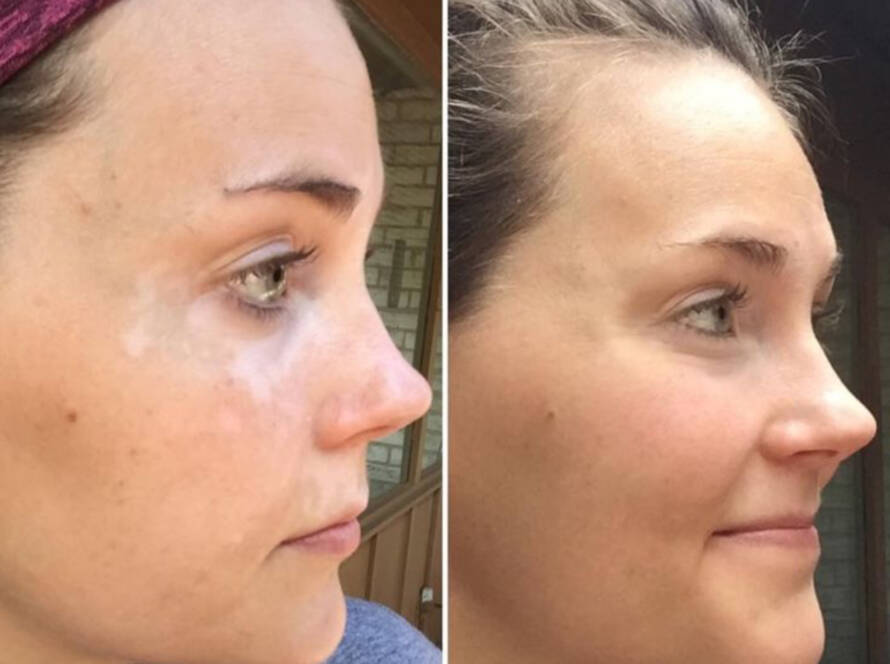
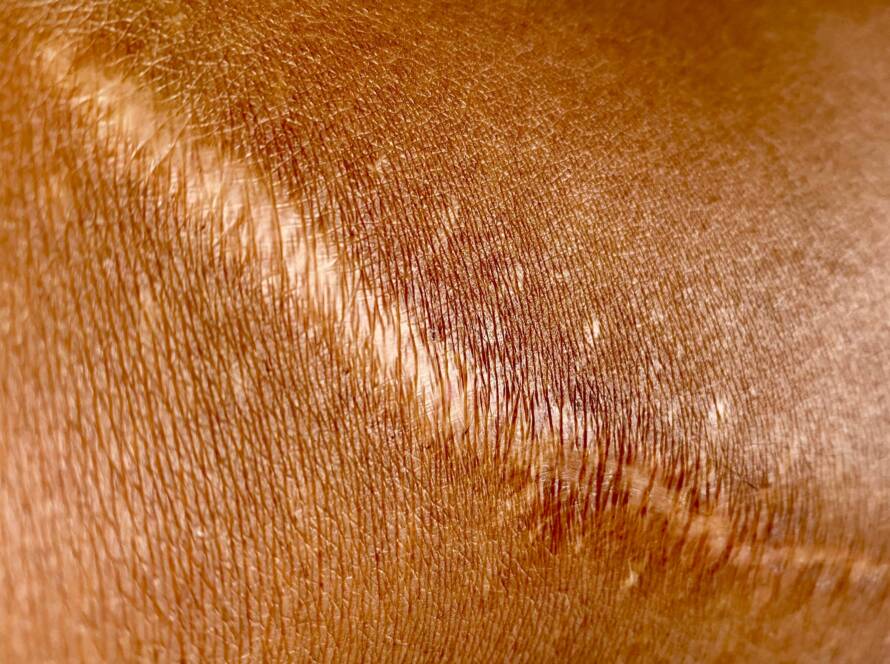
A breast scar can represent survival, relief, reconstruction, or a choice made for your own comfort. It can also remain the first thing you notice in the mirror. Breast surgery scar camouflage is a refined paramedical tattooing technique designed to reduce the visual contrast between a fully healed scar and the surrounding skin, helping the area appear softer, more blended, and less visually disruptive.
The goal is not to erase a scar or change the story behind it. It is to use custom-mixed pigment, precise placement, and a thoughtful treatment plan to make the scar less dominant. For many clients, that subtle shift brings a meaningful return to ease in clothing, swimwear, intimate settings, and everyday self-image.
What Breast Surgery Scar Camouflage Actually Treats
Scar camouflage works by implanting carefully selected pigment into lighter or differently colored areas of healed skin. Rather than applying one flat shade, an experienced paramedical artist builds color gradually, often layering tones that reflect the warmth, depth, and natural variation of your individual complexion.
The treatment may be considered for scars following breast reduction, augmentation, lift surgery, lumpectomy, mastectomy, reconstruction, or other chest-area procedures. Some clients also seek areola restoration after reconstructive surgery. Each service requires its own design approach, particularly when scar tissue has changed the skin’s texture, color, sensitivity, or shape.
The most natural result comes from managing expectations with care. Camouflage pigment can improve the appearance of color contrast, but it does not remove raised texture, flatten a thick scar, restore sensation, or change the underlying structure of the skin. A scar may still be visible up close. The difference is that it may no longer command attention from across the room or in a mirror.
Timing Matters More Than Most People Realize
A scar must be fully healed before it can be evaluated for camouflage. That generally means the skin is closed, stable in color, and no longer actively changing. Depending on the procedure, healing pattern, and your surgeon’s guidance, this can take many months and sometimes a year or longer.
Treating too early can compromise both the result and the integrity of healing skin. Fresh scar tissue may still be inflamed, red, firm, or unpredictable in how it accepts pigment. A careful artist will not rush this step simply because a scar feels emotionally ready to address.
Before scheduling, seek clearance from your medical provider when appropriate, especially after cancer treatment, reconstruction, radiation, or complications with healing. The best treatment plans respect the work your surgical team has already done. Paramedical tattooing is an aesthetic service, not a substitute for medical care or scar management recommended by your physician.
Who May Be a Good Candidate?
The ideal candidate has a mature, stable scar and realistic expectations about what pigment can achieve. Flat or relatively flat scars that are lighter than the surrounding skin often respond particularly well. However, suitability depends on more than the type of surgery.
During a proper consultation, the artist should assess your skin tone and undertone, scar color, texture, thickness, location, and sensitivity. They should also ask about your surgical history, medications, allergies, tendency toward keloid scarring, recent tanning, and any history of radiation or skin reactions. These details influence both candidacy and technique.
Scar camouflage may need to be postponed or may not be recommended when there is active irritation, infection, open skin, unstable scarring, a pronounced keloid tendency, or a condition that affects wound healing. Pregnancy, certain medications, and recent treatments in the area can also change the timing. Thoughtful screening is not a barrier to your result. It is part of protecting it.
Why Custom Color Matching Is the Center of the Work
Skin is never just beige, brown, or pink. It has warmth, coolness, translucency, freckles, veins, and subtle shifts in tone from one area of the body to another. A pigment that looks correct in a bottle can heal too warm, too cool, too light, or too opaque if it is not selected and layered with advanced understanding.
For breast surgery scar camouflage, the goal is often optical blending rather than perfect duplication. The artist may use a gentle, pixelated application to diffuse the edges of the scar and create a more natural transition into surrounding skin. The area is evaluated under appropriate lighting and considered from a normal conversational distance, not only under magnification.
Scar tissue can retain pigment differently from unscarred skin. One section may heal beautifully while another needs additional refinement. This is why a multi-session approach is common. It allows the artist to observe the healed color, adjust the formula if needed, and build coverage conservatively instead of overworking delicate tissue in one appointment.
What the Appointment Experience Should Feel Like
A premium paramedical experience begins with privacy, sanitation, and a detailed consultation. You should feel comfortable discussing your surgery, your concerns, and the level of visibility you hope to reduce. There is no single standard of beauty or healing, and there should be no pressure to pursue a result that does not feel right for you.
Once a treatment plan is established, the artist maps the area, customizes pigments, and works with controlled, intentional technique. Sensation varies. Scar tissue can be less sensitive, more sensitive, or inconsistent across the same treatment area. Your comfort should be checked throughout the session, with a pace that supports precision rather than speed.
At Visage New York, scar camouflage is approached as individualized artistry. Certified specialists work in a clean, private setting with the measured care this type of treatment deserves. The focus is always on an enhanced, believable result that honors your complexion and your healing process.
Healing After Scar Camouflage
Immediately after treatment, the area may appear more pronounced, warmer, or deeper in color than its final healed state. Mild redness, tenderness, dryness, or flaking can occur as the skin recovers. This temporary phase is expected, but the specific aftercare instructions provided for your skin and treatment area should always take priority.
In general, clients are asked to keep the area clean, avoid picking or scratching, and protect it from friction, sweat, soaking, sun exposure, and tanning while it heals. Tight garments or activities that rub against the treated skin may need to be adjusted briefly. Because the chest can experience movement and clothing contact throughout the day, careful aftercare has a direct impact on pigment retention.
The final color develops gradually. Do not judge a result in the first few days. As the skin settles, pigment softens and reveals its healed tone. A follow-up appointment is often the moment when small adjustments are made for better balance and coverage.
Results That Look Like Your Skin, Not Makeup
The strongest scar camouflage result is usually quiet. It does not look painted on, overly uniform, or disconnected from the rest of the chest. Instead, it creates a softer visual field, allowing the eye to move past the scar rather than stopping at it.
Longevity varies with skin type, lifestyle, sun exposure, immune response, scar tissue characteristics, and aftercare. Pigment may fade over time, and occasional maintenance can help preserve the blend. This is a trade-off worth discussing openly: a natural-looking approach is typically built in soft layers, not with dense pigment that may appear artificial as your skin changes.
A consultation is the place to ask for a candid assessment, including whether your scar is likely to benefit from camouflage now, later, or not at all. The right artist will value honesty over a quick booking and will explain the treatment in language that feels clear, respectful, and reassuring.
Your scar does not have to disappear for you to feel more at home in your skin. When timing, technique, and color are handled with precision, camouflage can offer a beautifully understated way to let your confidence take up more space.