

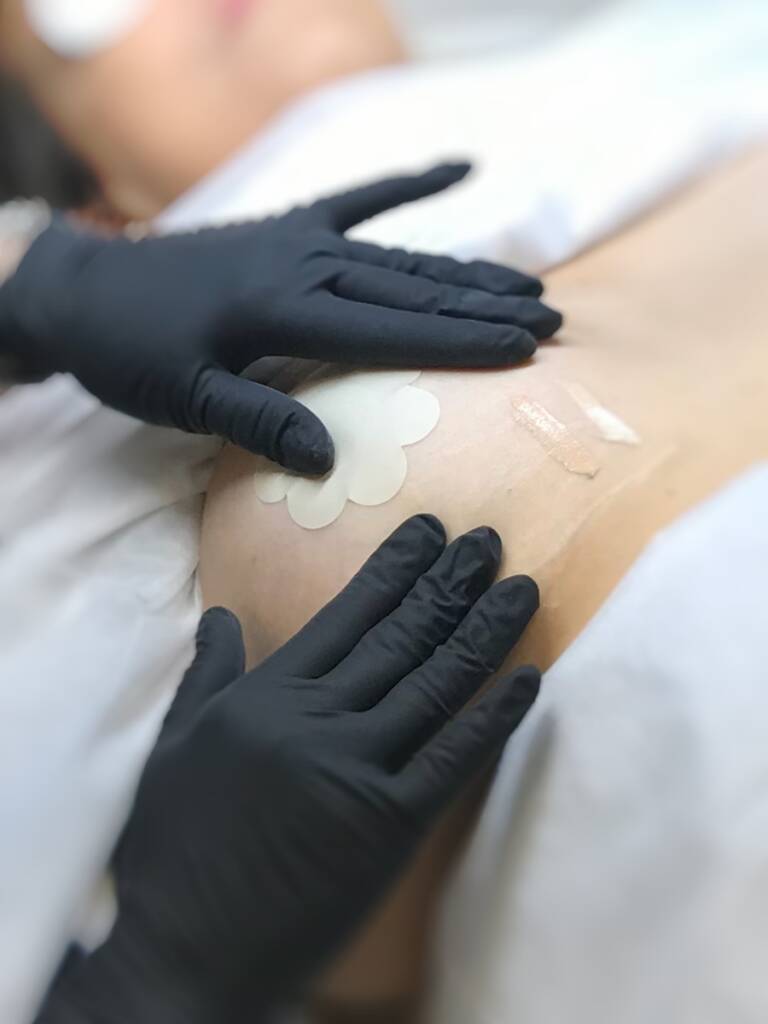
Scar camouflage at Visage New York Studio uses medical-grade pigment implantation to reduce the visibility of scars on the skin. It works for surgical scars, stretch marks, burns, and acne scarring, and it’s one of the more requested paramedical tattooing services among our New York clients.
Our Manhattan studio treats scars from tummy tucks, C-sections, breast augmentation, mastectomy and areola reconstruction, skin grafts, and old acne scarring. Each case gets a separate pigment mix based on the client’s undertone and Fitzpatrick skin type.
What Is Scar Camouflage and How It Works
Scar camouflage, sometimes called paramedical tattooing or corrective pigmentation, deposits custom-mixed pigment into the upper dermis of scar tissue. The goal is to match the scar’s color, and in some cases texture, to the surrounding skin closely enough that it stops drawing the eye.
Scar tissue behaves differently from normal skin. It often lacks melanin, holds pigment unevenly, and can appear paler, pinker, or more textured than the skin around it. A trained artist accounts for this during color mixing, not just at the point of application.
At the first consultation, your artist examines the scar’s depth, age, and texture, and checks whether it’s hypertrophic (raised) or has any residual keloid activity. Fully healed, flat scars respond best to camouflage.
Once the scar is confirmed suitable, pigments are custom blended using cool, warm, or neutral undertone bases and tested directly on the skin before the session starts. The artist implants pigment gradually, in thin layers, building up color rather than applying it all at once, since scar tissue absorbs pigment less predictably than normal skin.
Why New York City Clients Choose Visage New York
Manhattan clients come to us for precision color matching and a conservative approach to needle depth and pigment saturation, both of which affect how natural the final result looks.
Our artists work with an understanding of colorimetry and undertone theory, which matters more in scar work than in most permanent makeup procedures, since scar tissue rarely matches the surrounding skin tone on the first pass.
We see clients from the Upper East Side, Chelsea, Midtown, Tribeca, and SoHo, for both post-surgical scar correction and cosmetic scar camouflage.
Every session follows New York State cosmetic tattooing standards, with single-use needles and hypoallergenic pigments. We also walk clients through an after-care routine specific to their skin type to help the color settle evenly.
What to Expect During Treatment
- A typical session runs 1 to 3 hours, depending on the size and texture of the scar.
- A topical numbing agent is applied before pigment work begins.
- The artist maps the treatment area and tests pigment swatches on the skin before starting.
- Pigment is implanted in micro-layers using a fine-gauge tattooing device.
- You’ll see color immediately after treatment, but the final, settled tone shows up 2 to 4 weeks later once the skin finishes healing.
- Larger or older scars sometimes need a second session for full, even coverage.
Healing and After-Care
- Mild tenderness or swelling in the treated area for a day or two is normal.
- Keep the area clean and lightly moisturized while it heals.
- Skip saunas, hot showers, pools, and exfoliating products for at least a week.
- Sun exposure can shift pigment tone over time, so sunscreen on the treated area matters even after healing.
- We provide a skin-specific after-care kit to support even healing and color retention.
Benefits of Scar Camouflage
- Reduces visible contrast between scar tissue and surrounding skin
- Blends surgical lines, stretch marks, and graft scars into the surrounding tone
- Works across a range of skin tones through custom pigment matching, not a fixed shade menu
- Non-surgical, with no real downtime beyond the healing week
- Results generally hold for several years before a touch-up is needed
Who Can Get Scar Camouflage
A scar is generally ready for camouflage once it’s fully healed, usually at least 9 to 12 months old, flat, and free of active keloid or hypertrophic texture. Good candidates include people with:
- Surgical scars from tummy tucks, C-sections, or breast augmentation
- Acne scarring or skin graft marks
- Burn scars or stretch marks
- Vitiligo patches, evaluated case by case, since pigment matching for vitiligo differs from scar work
We check scar maturity and skin tone at consultation before recommending a treatment plan.
Longevity and Maintenance
Results typically last 3 to 5 years, depending on skin type, sun exposure, and after-care. Pigment fades gradually rather than disappearing, so most clients maintain results with a short touch-up session rather than starting over. We use organic and inorganic pigment bases chosen for their resistance to color shift under UV exposure.
Safety and Professional Standards
All procedures follow New York State cosmetic tattooing regulations, with sterile, single-use needles and hypoallergenic pigments. Our artists are trained in medical micropigmentation, colorimetry, and skin response management, which matters when working across different skin tones and scar textures in the same day.
Scar Camouflage Demand in Manhattan
Interest in scar camouflage and paramedical tattooing has grown across Manhattan as more people look for non-surgical options to reduce the visibility of scarring after surgery or injury. Visage New York approaches each case individually, with pigment mixed and tested for that specific scar rather than applied from a standard palette.
Frequently Asked Questions
How long does scar camouflage last?
Typically 3 to 5 years, depending on skin type, sun exposure, and after-care. Pigment fades gradually and can be refreshed with a short touch-up session.
Is scar camouflage safe for all skin tones?
Yes. Pigment is custom mixed for each client’s undertone and Fitzpatrick skin type, and all procedures follow New York State cosmetic tattooing regulations with sterile, single-use needles.
Does scar camouflage hurt?
A topical numbing agent is applied before the session, so most clients feel pressure or mild tingling rather than pain.
How soon after a scar forms can I get camouflage treatment?
The scar should be fully healed, generally at least 9 to 12 months old, and free of raised or active keloid texture before treatment.
How many sessions will I need?
Most scars are fully blended in one session of 1 to 3 hours. Larger or older scars sometimes need a second session for complete coverage.
Can scar camouflage treat stretch marks too?
Yes. The same pigment implantation technique is used for stretch mark revision, blending surgical lines and stretch marks into the surrounding skin tone.
Book a Scar Camouflage Consultation in New York
Book a consultation at Visage New York to have your scar assessed and your pigment custom mixed before treatment.
At your appointment, we’ll examine the scar’s depth, age, and texture, explain what results are realistic for your skin, and walk you through the full process before any pigment work begins.
See our full range of paramedical and permanent makeup services, or get in touch to schedule a scar camouflage consultation in Manhattan.
BOOK AN APPOINTMENT