Microblading Aftercare and Healing Guide
Day three. You lean toward the mirror, and your brows look darker, thicker, and a little more intense than the soft, natural pair you walked out with. A tiny voice asks whether something went wrong. Nothing did. This is exactly why microblading aftercare deserves as much attention as the appointment itself. The weeks that follow decide how crisp, even, and long-lasting your strokes turn out, and most of the work is simply knowing what is normal and what to leave alone.
Why Proper Microblading Aftercare Matters
Your brows are, in a very real sense, a healing wound. Pigment sits just beneath the skin surface, and the way that skin recovers determines whether each stroke stays or slips away. Good care helps color settle evenly, keeps strokes sharp, and lowers the chance of irritation. Poor care can lead to patchy spots, faded lines, or the need for a bigger correction later. The good news is that aftercare is not complicated. It is mostly a short list of habits, repeated for a couple of weeks.
How Long Does Microblading Take to Heal?
The surface of your skin usually calms down within about two weeks, but the full process takes closer to four to six weeks. That gap surprises people. Brows can look finished by day fourteen and then seem to lose color before settling into their true shade. This is a normal part of microblading healing, not a sign that the pigment has failed. Skin heals in layers, and the deeper ones need time to catch up. Give it the full month before you judge the results.
Microblading Healing Stages and What to Expect
Healing follows a rhythm. Each stage looks different, and knowing what comes next removes most of the worry.
Days 1 to 3 After Microblading
Brows look bold and slightly swollen or tender. Color is at its most intense, and you may notice a little clear fluid or mild redness. Keep the area clean and avoid touching it.
Days 4 to 7 Darkening and Flaking
- Dryness begins and the skin may feel tight
- Light flaking starts at the edges
- Color can look darker just before the first peel
- Itching may appear, which is a sign of normal healing
Days 8 to 14 Peeling and Color Changes
Now the flakes fall away and take some of the surface color with them. Many people panic here because brows suddenly look patchy or faded. They are not ruined. The pigment underneath is still settling, and the strokes often reappear as the skin finishes renewing.
Weeks 3 to 4 Final Healing and Color
- True color emerges and tends to look softer than day one
- Strokes smooth out and read as natural hair
- Gaps become clear, which helps plan the follow-up
- Touch up timing is decided based on what has healed
What Should You Do After Microblading?
The first rule of aftercare is simple: do less. The skin wants to be left alone, kept clean and kept protected. Your artist will give you specific instructions, and those come first. The habits below sit alongside them and are shared by most good aftercare plans.
Keep Your Brows Clean and Dry
Your artist may suggest gently blotting the area with a clean, damp cotton pad and a mild cleanser, then patting it dry. Keeping the brows clean prevents buildup that can irritate healing skin. Use only what your artist recommends, and avoid rubbing.
Avoid Touching or Picking Your Brows
- Do not pick flakes, even when they look ready to fall
- Keep fingers away except when applying aftercare
- Wash your hands first if you do need to touch the area
Protect Brows From Excess Moisture
Water is fine in small amounts, but soaking the brows can pull pigment out. Face-washing needs a little care for the first week or so. Shield your brows in the shower and keep steam off them.
Follow Your Artist Aftercare Instructions
Every artist works a little differently, so their plan overrides any general guide. They know the pigment they used, the depth they worked at and how your skin responded. If something in this guide differs from your instructions, go with your instructions.
What Should You Avoid After Microblading?
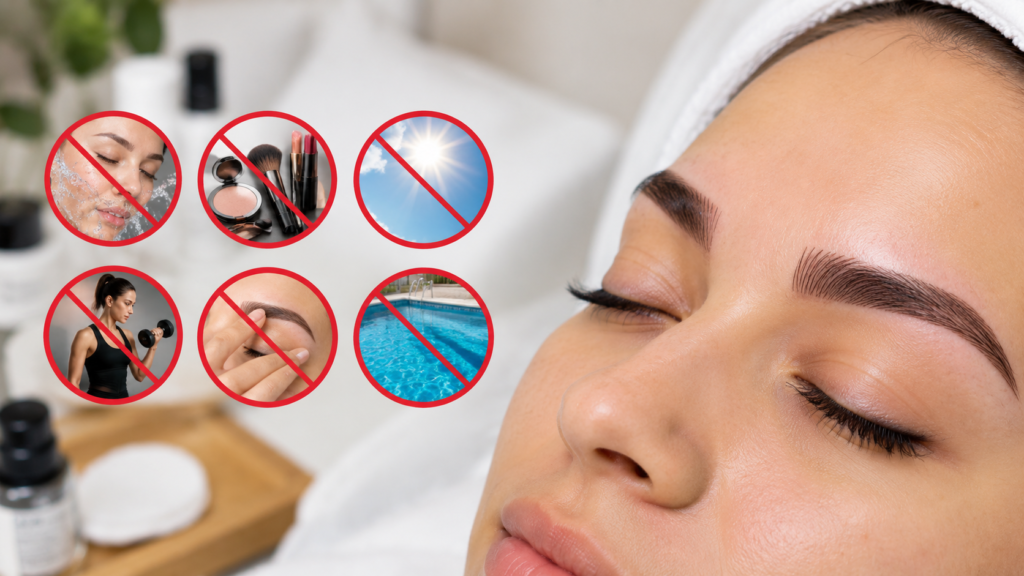
Healing skin does not like surprises. Heat, water, friction and sunshine are the four things that tend to cause the most damage in the early weeks. The next few sections explain where each one trips people up and why a few weeks of caution protects months of results.
Swimming and Excess Water Exposure
Pools, hot tubs, lakes and the sea are off the list until your skin is fully healed. Chlorine and bacteria can irritate the area, and soaking can lift pigment. Most artists suggest waiting at least two weeks.
Exercise and Excessive Sweating
- Skip intense workouts for the first week or two
- Sweat can lift pigment and irritate fresh skin
- Gentle walks are usually fine
- Wipe sweat gently with a clean cloth, never rub
Saunas and Steam Rooms
Heat and moisture are a poor mix for healing brows. Steam rooms, saunas and very hot showers can soften the skin and affect pigment retention, so give them a break for a couple of weeks.
Sun Exposure and Active Skincare
- Stay out of direct sun and wear a hat outside
- Delay retinol and acids on or near the brows
- Avoid peels and facials around the brow area
- Add sunscreen only once your artist says the skin has healed
Can You Wear Makeup After Microblading?
On the brows, not for a while. Brow pencils, powders and gels can introduce bacteria and drag at healing skin, so most artists ask you to skip them until flaking has stopped, usually around ten to fourteen days. Around the brows, foundation and concealer can be used carefully once the area has settled, as long as nothing touches the treated skin. If you have an important event coming up, tell your artist before the appointment so your timing works out.
Why Do Microbladed Brows Look Dark During Healing?
Because the pigment is sitting close to the surface, and the skin around it is not yet doing its softening work. Scabs and flaking skin also hold onto color, which makes strokes look thicker and darker than the final result. As the top layer sheds, brightness drops and color settles to a shade that blends with your skin. Most clients end up with brows that look noticeably softer than they did in the first week. If your artist chose a shade a little deeper on purpose, this is why.
Why Do Brows Look Light After Peeling?
The peel is the point where the surface layer falls away and, with it, a good share of that early intensity. Underneath, new skin forms over the pigment, which can mute it for a while. This stage is sometimes called the “ghosting” phase, and it is a normal part of brow healing. Strokes tend to return over the next few weeks as the skin clears. If they have not fully come back by week six, your touch up will fill in any gaps.
Microblading Aftercare for Different Skin Types
Skin type changes the way brows heal, so a one-size plan does not always fit. The ideas below are adjustments rather than a separate routine. For the complete picture on oily skin, our guide on microblading for oily skin goes into much more detail.
Aftercare for Oily Skin
Oil can make healing look messier, so gentle and regular cleaning matters more. Skip heavy balms unless your artist specifically recommends one.
Aftercare for Dry or Sensitive Skin
- Tightness and flaking may last a little longer
- Use only the balm your artist suggests, in a very thin layer
- Avoid fragranced products near the area
- Be gentle if redness lingers
Aftercare for Combination Skin
Treat each zone by what it needs. The oilier front of the brow may need more careful cleaning, while the drier tail needs a lighter touch with moisturizer. Check in with your artist if the two areas heal at different speeds.
When Can You Resume Your Normal Skincare Routine?
Most people can return to everyday cleansing and moisturizing on the rest of the face almost right away, as long as products stay off the brows. For the brow area itself, plan on waiting until healing is complete, usually around four weeks. Exfoliating acids, retinol and scrubs near the brows should wait even longer, since they speed up fading. Once you are given the green light, reintroduce products one at a time so you can spot any reaction early.
When Is a Microblading Touch Up Needed?
Almost every client needs one. A touch up is booked after healing is done, usually four to eight weeks after the first session, so your artist can see the true result and fix anything that faded unevenly. Doing it too early means working over skin that has not finished changing. If you are curious about how often brows need refreshing in the long run, we cover that in our guide to how long microblading lasts.
Signs You Should Contact Your Brow Artist
Normal healing includes redness, tightness, flaking and itching. Some things are not normal, and a quick message to your artist is always better than waiting. Reach out if you notice:
- Spreading redness or swelling that gets worse after the first few days
- Pus, yellow discharge or a bad smell
- Increasing pain instead of settling down
- Fever or feeling unwell
- Large patches that do not heal or look unusual
Strong aftercare is the quiet half of a great result, and a studio that checks in with you through healing is worth choosing. The team at Visage New York Studio in Manhattan guides clients through every stage, from the first day to the follow-up.