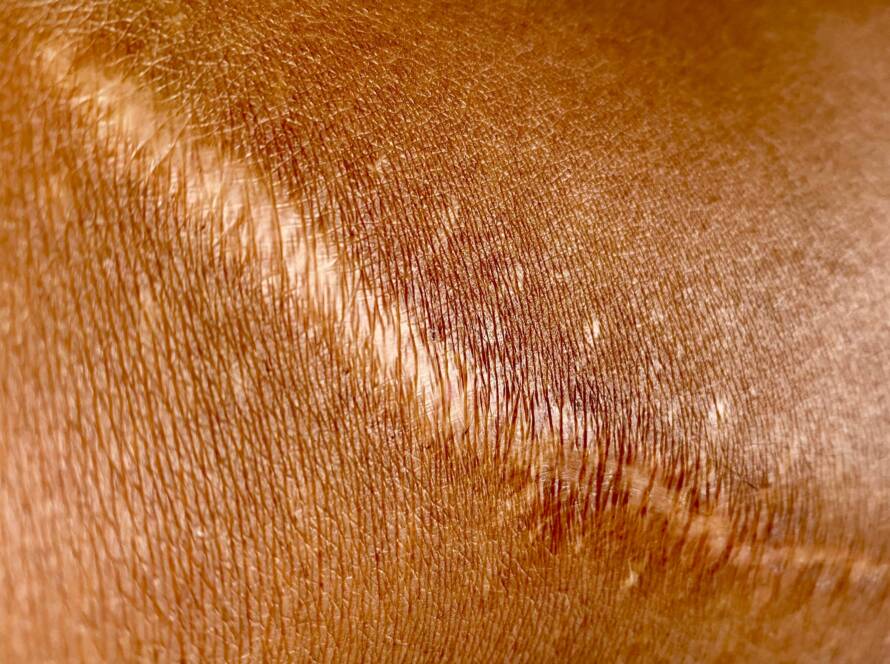
Comfortable in Your Clothes Again: A Gentle Guide to Breast Surgery Scars
There is a particular moment many people remember: standing in a fitting room or beside the bathroom mirror, looking at a scar that tells a very big story. Surgery may have been the right and even the brave choice, yet the mark it left can still make you pause before a swimsuit, a low neckline or a quiet moment alone. Breast surgery scar camouflage is a soft, color-based way to help that mark settle into the background, so your skin looks more even and your attention goes back to living your life.
Why Scars Here Feel Different
Scars on the chest are not quite like scars anywhere else. The skin is thin, it moves with every breath and it is covered by clothing most of the day, which means it often stays paler or pinker than the skin around it. Straps, underwires and seams can also rub against it, and the area may feel tender or oddly numb for a long time.
Anyone looking into breast scar camouflage is usually dealing with more than appearance. There is often emotion tied to the surgery itself, and a good artist understands that the skin may hold feelings along with the mark. That is why the work here tends to move slowly, with plenty of listening before any pigment is chosen.
A Simple Readiness Signal
Timing matters a great deal on this part of the body. Think of it as a traffic light for your skin. Your surgeon always has the final say, but this gives you a rough idea of where you stand.
Here is how to read it:
- Green light: The scar is flat, pale and fully healed, and your surgeon has given you the go-ahead
- Yellow light: The scar still looks pink, feels tender, or has been through radiation, so waiting and asking questions first is the wise choice
- Red light: There is an open spot, swelling, redness or any sign of infection, and treatment should wait until the skin is calm
The Conversation With Your Surgeon
Before anything is booked, a short talk with your surgeon or care team is worth having. They know how your skin has healed and can tell you whether it is ready. Some will happily share a written note, and many studios appreciate having one.
Questions that help in that talk: Has the scar finished maturing? Are there any medicines or conditions that could slow healing? Is the treated skin safe to work on? You do not need to prepare a long speech. Even a simple “I am thinking about camouflage tattooing, is my skin ready?” opens the right door.
What the Work Feels Like on Tender Skin
Because the skin is sensitive, breast scar tattooing is done with a light hand and plenty of check-ins. Some parts of a scarred chest can feel almost nothing, while nearby skin may feel very sensitive, so the experience can vary across a single scar. Your artist will adjust the pace and the numbing to match.
Pigment is blended to your exact skin tone and added in thin layers. Sessions tend to be calm and private, and you can pause whenever you want. Healing follows in the weeks after, with a follow-up visit to fine-tune color if needed.
Living in Your Clothes Again
The best part of this journey is often what comes after. A scar that blends in changes the small daily choices, from what you put on in the morning to how you feel in a gym changing room. Here are the moments people often mention:
- Wearing a favorite neckline without adjusting it every few minutes
- Choosing a swimsuit based on the style, not the coverage
- Feeling relaxed during intimate moments
- Looking in the mirror without your eye going straight to the scar
A well-planned breast surgery scar tattoo will not erase the story, only soften how loudly it shows. Protecting the area from the sun and moisturizing the skin keeps the color looking natural for longer.
You Set the Pace
There is no deadline for feeling at home in your own skin, and no right moment other than the one that suits you. When you are ready to talk, Visage New York Studio offers a quiet, respectful consultation where you can ask anything and decide in your own time.
Frequently Asked Questions
What is breast surgery scar camouflage?
It is a treatment that places skin-matched pigment into a healed scar. The aim is to make the scar blend with the skin around it.
How does breast scar camouflage work?
An artist mixes a shade that matches your skin tone and applies it in thin layers. The scar’s color contrast softens over time.
Can breast surgery scars be camouflaged with tattooing?
Yes, once they are fully healed and your doctor agrees. Camouflage changes color, not the texture of the scar.
Can scar camouflage make breast surgery scars less visible?
Often, yes, It makes the scar blend in better, though it will not remove it completely.
What types of breast surgery scars can be camouflaged?
Flat, healed, pale scars from reduction, lift, augmentation, mastectomy or reconstruction can often be softened. Raised or active scars should wait.
FAQs
What is breast surgery scar camouflage?
This is a paramedical tattoo service. It is used to help scars from breast surgery blend in with the skin around them. A specialist matches pigment to your usual skin tone.
How does breast scar camouflage work?
An artist mixes pigment to match your skin and carefully implants it into the scar tissue, softening its color over one or more sessions.
Can scar camouflage help with breast reduction or breast augmentation scars?
Yes both are good candidates for this treatment once the scars have healed completely and flattened.
Can breast surgery scar camouflage cover mastectomy scars?
It can, and it’s often paired with areola tattooing for a more complete, natural-looking result after mastectomy.
How long should I wait after breast surgery before getting scar camouflage?
Most artists recommend waiting at least a year, giving the scar enough time to settle and stop changing in color or texture.
How long does breast surgery scar camouflage last?
Results generally last one to three years before the pigment fades enough to need a touch-up.