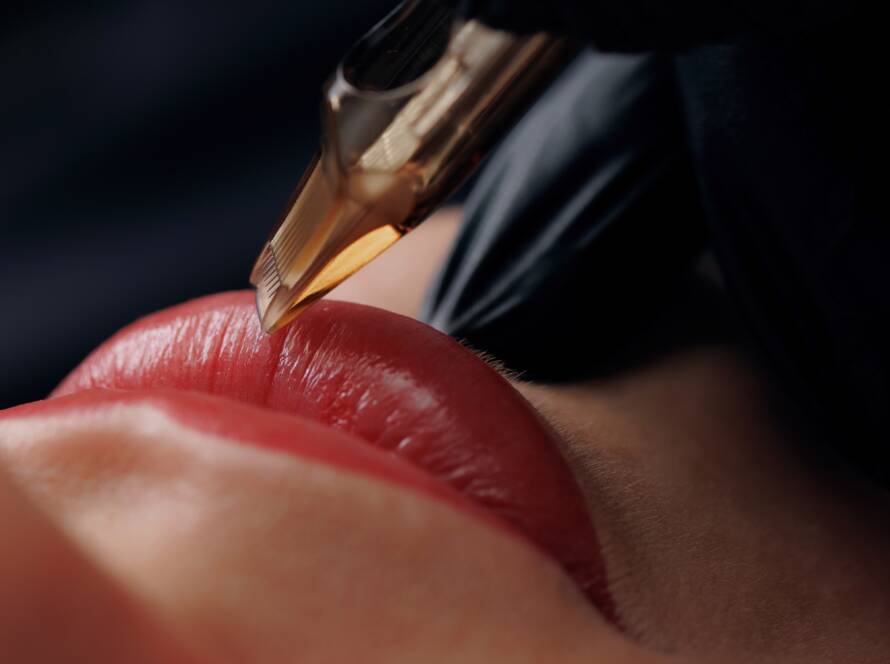
Your lips may look brighter and more defined immediately after a lip blush appointment, then appear to lose much of that color a few days later. This is the point in lip blush healing that surprises many first-time clients. It is also completely expected. Fresh pigment, natural swelling, surface healing, and the skin’s renewal process all influence what you see from day to day.
Lip blush is designed to create a softly enhanced, balanced wash of color, not an opaque lipstick effect. The final result develops gradually. Giving your lips the right conditions to heal is part of achieving a polished, natural-looking outcome that feels beautifully your own.
Lip Blush Healing Timeline: What to Expect
Every client heals at a slightly different pace based on skin type, lifestyle, immune response, and the technique used. Still, the stages below offer a reliable picture of the process.
Days 1 and 2: Bright color and mild swelling
Immediately after treatment, lips typically look more vivid, more saturated, and slightly fuller than the healed result. Mild swelling, tenderness, and a tight sensation are common, especially during the first 24 hours. For most clients, swelling is subtle and resolves quickly.
The color at this stage is not your final shade. Fresh pigment sits close to the skin’s surface, and the lips are temporarily hydrated and stimulated from treatment. Avoid judging the result too soon. Your artist has selected the pigment and technique with the healed color, your natural lip tone, and your desired level of definition in mind.
Days 3 through 7: Dryness, flaking, and the “too light” stage
As the surface begins to heal, your lips may feel dry and develop light flaking or fine peeling. The color can look patchy, uneven, or unexpectedly pale as tiny flakes release. Do not pick, rub, scrub, or bite at the skin. Removing flakes before they are ready can interrupt pigment retention and create uneven healing.
This stage requires patience. The pigment has not disappeared. It is settling beneath newly healed skin, where it will gradually re-emerge. Continue using only the aftercare product recommended by your artist and apply it in a very thin layer as directed. Too much product can over-soften the healing skin.
Weeks 2 through 4: Color returns and softens
Once visible flaking is complete, lips often appear lighter than expected for a period of time. This is sometimes called the ghosting phase. The healed surface can look pale, cool, or less even while the color is still developing underneath.
Over the next several weeks, the shade becomes more visible and refined. It may heal softer, cooler, or warmer than it appeared on appointment day before settling into its intended tone. This is why experienced cosmetic tattoo artists set expectations around the full healing window rather than promising a finished result on day one.
Weeks 4 through 8: Your settled result
By about six to eight weeks, the color should be much closer to its true healed appearance. A follow-up session, when included in your treatment plan, allows your artist to assess retention, fine-tune any areas that healed lighter, and perfect the balance of the lip shape and color.
Not every lip retains pigment in exactly the same way. Lips with significant dryness, a history of filler, natural uneven tone, frequent sun exposure, or prior cosmetic tattooing may need more individualized planning. A careful consultation is what makes a customized result possible.
Lip Blush Aftercare That Protects Your Result
The goal of aftercare is simple: keep the lips clean, protected, and free from unnecessary friction while they recover. Your artist’s instructions should always take priority, since aftercare can vary slightly by technique and your individual skin needs.
For the first several days, gently blot away any excess moisture if instructed, then use a clean cotton swab to apply the recommended healing product. Avoid touching your lips unless your hands have been thoroughly washed. Sleeping on a clean pillowcase and keeping hair away from your mouth can also reduce avoidable irritation.
During the active healing period, skip anything that may introduce bacteria, heat, moisture, or friction. That generally means avoiding swimming pools, hot tubs, saunas, steam rooms, intense workouts that cause heavy sweating, and direct sun exposure. Avoid kissing until the surface has healed, and take extra care with hot drinks, spicy foods, acidic foods, and messy meals during the first few days. A straw may be helpful when drinking beverages that could irritate the treated area.
Do not apply lipstick, lip gloss, exfoliants, retinol products, or unapproved balms over healing lips. Even a familiar product can contain fragrance or active ingredients that cause irritation. Once your artist confirms that healing is complete, daily SPF lip protection is one of the most effective ways to help preserve your color.
Cold Sores and Lip Blush Healing
If you have ever had a cold sore, tell your artist before booking your treatment. Cosmetic tattooing can trigger an outbreak in people who are prone to them, even if it has been years since the last one. Your primary care provider can advise whether preventive antiviral medication is appropriate for you.
Do not proceed with treatment if you have an active cold sore, cracked or infected skin around the mouth, or feel an outbreak beginning. Rescheduling protects both your comfort and the quality of your healed result.
What Is Normal, and When to Contact Your Artist
A little swelling, tenderness, dryness, and fine flaking are normal aspects of healing. Temporary unevenness in color is also common, particularly before the pigment settles. The process can feel dramatic in the mirror because lips are such a visible feature, but day-to-day changes do not necessarily signal a problem.
Contact your artist promptly if you experience increasing redness, spreading warmth, worsening pain, significant swelling that does not improve, pus-like discharge, fever, or any signs of an allergic reaction. For urgent symptoms or concerns about infection, seek medical care. A responsible artist is there to guide normal aftercare, while medical professionals should evaluate medical complications.
How to Support Beautiful, Even Color Retention
The best preparation begins before your appointment. Arrive with healthy, well-hydrated lips, but avoid over-exfoliating in the days leading up to treatment. If your lips are severely chapped or peeling, your appointment may need to be adjusted so the artist can work on a smooth, stable surface.
Long-term retention depends on more than aftercare. Sun exposure, smoking, frequent use of exfoliating lip products, skin metabolism, and the natural turnover of your skin can all affect how long the shade stays fresh. Most clients appreciate that lip blush fades softly rather than changing abruptly, but occasional refresh sessions are a normal part of maintaining a refined result.
A premium lip blush experience is never just about the appointment itself. It is the thoughtful design of the color, the precision of the application, and the calm guidance that follows. At Visage New York, that attention to detail extends through every stage of healing, so you can let the process unfold with confidence and look forward to color that feels naturally, unmistakably yours.