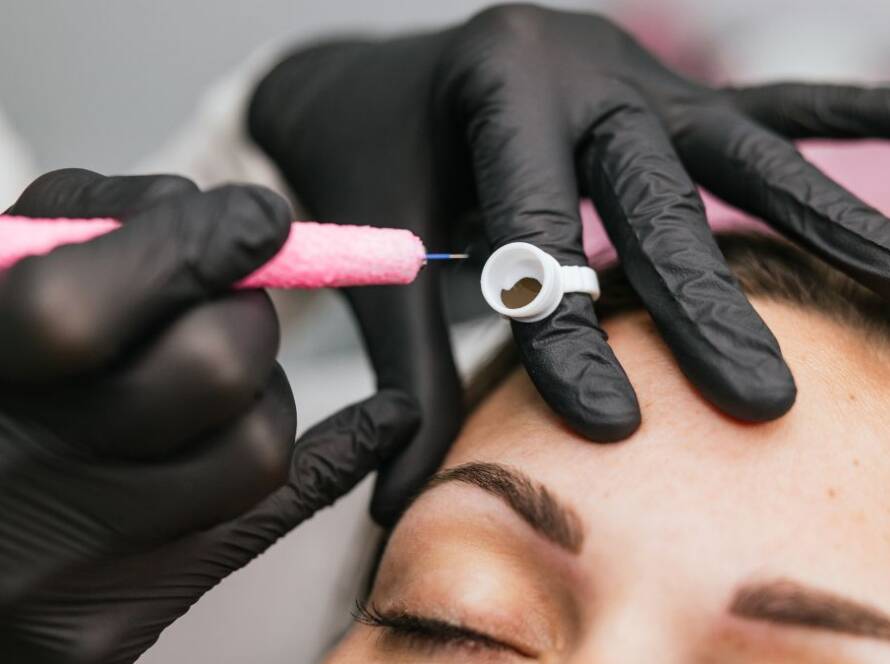
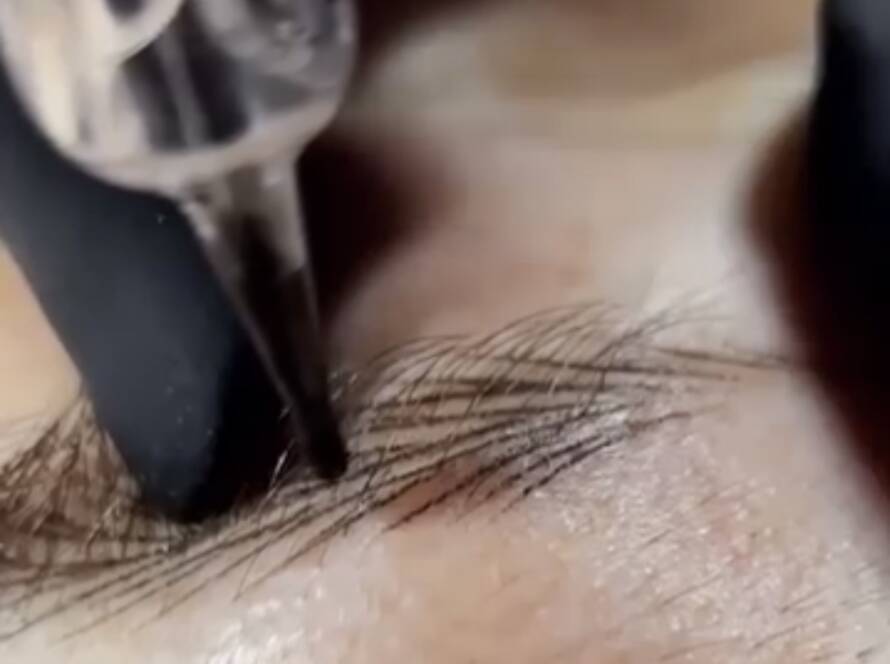
Two eyebrow photos catch your eye. One shows delicate hair-like strokes, the other a touch more definition. Both look natural, yet they were made with different methods, and that is what makes the nano brows vs microblading decision so confusing at first.
The finished look depends on more than the tool in the artist’s hand. Your skin, the brow hair you already have and the way the brows are designed all shape how they appear after healing, which is something a single photo cannot show you.
Nano Brows vs Microblading: The Core Difference
Both treatments place pigment in the skin to create hair-like strokes. The difference is how. Nano brows use a cosmetic tattoo machine with a very fine needle, while microblading uses a handheld manual tool with tiny needles arranged in a row. Either can look subtle when the design and the technique suit the client.
| Nano brows | Microblading | |
| Tool | Cosmetic tattoo machine | Manual handheld blade |
| Strokes | Fine, machine-made | Hand-drawn, slightly feathered |
| Skin fit | Needs individual assessment | Needs individual assessment |
| Healing | Varies by skin and treatment | Varies by skin and treatment |
| Upkeep | Future maintenance may be needed | Future maintenance may be needed |
No method is automatically gentler, longer lasting or safer, so be wary of anyone who claims otherwise.
Why Nano Brows Are Often the More Versatile Choice
Machine application gives an artist room to adjust, and that flexibility is where nano brows tend to shine.
- Placement control: Strokes can be positioned one at a time to follow your brow design.
- Working with what you have: Fine strokes can fill thin patches while leaving healthy hairs alone.
- Adaptable design: Direction and spacing can be tuned to different natural shapes.
- An option when blading is a poor fit: Some clients are better served by a machine technique, depending on assessment.
Picture someone whose brows are full at the front but thin toward the tail. They may not need a new shape at all. A handful of well-placed strokes can make the whole brow look more balanced. Nano brows are not right for every skin type, though, and they are not a risk-free shortcut.
What Microblading Does Beautifully
Microblading is still a lovely option for the right person. Drawn by hand, the strokes have a soft, feathered quality that can blend easily with existing hair, which many people find appealing when they want a natural looking eyebrow tattoo.
Consider a client with fairly full brows who just wants a few gaps filled or a short tail extended. A dramatic makeover would be too much for them, and microblading can deliver that light touch.
As with any technique, the outcome comes down to the artist’s design, your skin condition and how carefully the work is planned.
How Results Heal and Fade
Fresh brows look their darkest and sharpest. During the first days, color can seem heavy, the area may feel sensitive, and light flaking is possible.
Once the skin settles, strokes often look softer than they did at first, which is why healed photos tell you more than day-of images. Ask to see both. Over the longer term, color fades gradually, at a pace that depends on your skin, sun exposure, and skincare habits.
Both methods count as permanent makeup eyebrows, since they are cosmetic tattoos. That means some pigment can stay in the skin even after the brows no longer look fresh. A follow-up visit may be recommended after healing, depending on how much pigment your skin kept, but it is not a given for everyone.
Which Technique Is Better for Your Skin?
When people ask nano brows or microblading, the honest answer starts with skin. Here is how different situations tend to play out:
- Normal to dry skin: Either approach may work, depending on skin health and the look you want.
- Oily skin: Fine manual strokes can soften faster, so a machine technique or a shaded look may be worth discussing.
- Mature or delicate skin: Texture and elasticity change how pigment settles, so this needs careful individual assessment.
- Previously tattooed brows: Old pigment, how saturated it is and any scarring can limit how crisp new strokes will look.
- Sensitive or irritated skin: Active irritation, certain skin conditions and some medical history may mean waiting or choosing differently.
Skin type is not a diagnosis, and none of these is a rule. If you have oily skin and love hair strokes, a good artist will tell you that strokes might blur sooner than you hope. You should hear that before the appointment, not after healing.
The Design Matters as Much as the Technique
Two people can get the same method and walk away with very different brows, because design decisions do much of the work. An artist considers how much natural hair you have, whether you want gaps softly filled or clearly defined brows, how your brow shape and spacing sit with your features, and how you usually do your makeup.
That is why the best eyebrow tattoo technique for one person may not suit another. The answer depends on how well the method fits your skin and the look you are after.
A good consultation makes these choices visible. You should come away understanding where strokes will go, how dark they will start and what the brows should look like once healed.
Questions to Ask Before Booking
Take a short list with you to the consultation. These questions help you compare artists and treatments on real information:
- Which technique would you recommend for my skin, and why?
- Can I see healed results on clients with brows like mine?
- How would you work around my existing brow hair or an old cosmetic tattoo?
- What should I realistically expect once everything has healed?
- What does the quoted price cover, including follow-up visits?
- Which license and hygiene practices should I know about, and what aftercare will I be given?
In New York City, artists who perform microblading and permanent makeup need a tattoo license and completed infection-control training, so it is reasonable to ask.
Conclusion
Choosing between nano brows and microblading is about more than which one looks better in a photograph. Your skin, your existing brow hair and the level of definition you want all shape the result. Comparing healed work and talking openly with an experienced artist will help you decide with confidence. For personalized eyebrow guidance in Manhattan, schedule a consultation with Visage New York.
FAQs
Are nano brows safer than microblading for oily skin?
Not automatically. Nano brows may hold definition better on oily skin, but both carry risks like infection and allergic reaction.
Can you get nano brows if you already have old microblading?
Possibly. It depends on how much pigment remains, its color and your skin’s condition. An artist should examine it first.
How often do nano brows and microblading need a touch-up?
There is no fixed schedule. It depends on your skin, pigment retention and sun exposure, and your artist can advise.
Can nano brows or microblading look natural on sparse or thin eyebrows?
Yes, when stroke spacing and color suit you. Very thin brows may also need shading or a combination approach.
What should you avoid before and after getting nano brows or microblading?
Tell your artist about medications, allergies and past tattoos beforehand. Afterward, don’t pick at skin or use unapproved products.